


AI-Based Flash Dryer Optimization Using Exhaust Humidity
Project Example: Flash Dryer Operating Data Analysis
Historical operating data from a flash dryer was analyzed using AI-assisted statistical modeling to better understand how exhaust humidity relates to key process variables and dryer performance.
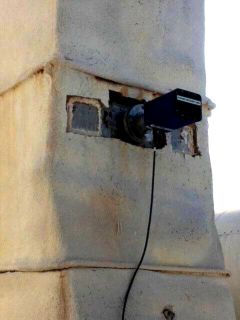
Figure 1: Sensor Installation
The objective was to determine whether the exhaust humidity measurement could improve process visibility, strengthen predictive models, and support a more efficient dryer control strategy.
Variables Evaluated
The analysis included the following operating parameters:
- Exhaust Humidity (% Volume)
- Inlet Temperature (T1)
- Outlet Temperature (T2)
- ΔT (Inlet Temperature – Outlet Temperature)
- Feed Rate
- Damper Position
Key Findings
The analysis showed several important relationships:
- ΔT was the strongest single predictor of exhaust humidity, confirming that the humidity sensor is directly responding to the evaporation rate within the dryer.
- Feed rate showed a very strong relationship with exhaust humidity, indicating that the sensor is tracking changes in moisture load entering the dryer.
- Inlet temperature had a strong positive relationship with exhaust humidity, reflecting increased evaporation with higher heat input.
- Outlet temperature showed the expected inverse relationship with exhaust humidity, consistent with the thermodynamics of the drying process.
- Damper position had little direct linear correlation with exhaust humidity, but AI modeling identified interaction effects with ΔT and outlet temperature, showing that airflow can influence drying performance under specific operating conditions.
AI Model Results
A Response Surface Model (RSM) produced an excellent fit to the operating data.
This demonstrated that the drying process is influenced by the combined interaction of heat input, production rate, and airflow rather than by any single variable alone.
Engineering Interpretation
The humidity sensor responds directly to evaporation occurring inside the dryer. Because it measures the actual moisture being removed from the product, it provides a real-time process variable that improves visibility compared with relying on temperature measurements alone.
The analysis also showed that exhaust humidity captures process information not fully represented by ΔT or outlet temperature individually. This makes it a strong variable for predictive modeling and advanced dryer control.
Potential Control Strategy
A practical implementation would retain the existing temperature control loops while using exhaust humidity as a supervisory process variable.
The humidity measurement can be used to:
- Optimize airflow or damper position based on actual evaporation rate.
- Improve energy efficiency while maintaining product quality.
- Detect drying performance changes earlier than temperature alone.
- Maintain a more consistent evaporation rate as feed conditions change.
- Provide additional protection against process upsets and unstable dryer operation.
Conclusion
This project demonstrates that exhaust humidity is an independent process variable that can significantly strengthen predictive models of flash dryer performance.
Incorporating the humidity measurement into the dryer control strategy provides a more complete picture of the drying process and has the potential to improve product consistency, reduce energy consumption, and increase overall dryer efficiency.
Download the sample dataset below and run it through your preferred AI or statistical modeling tools to validate the analysis and explore the relationships between the process variables.